Written by Andrew K. Arnett
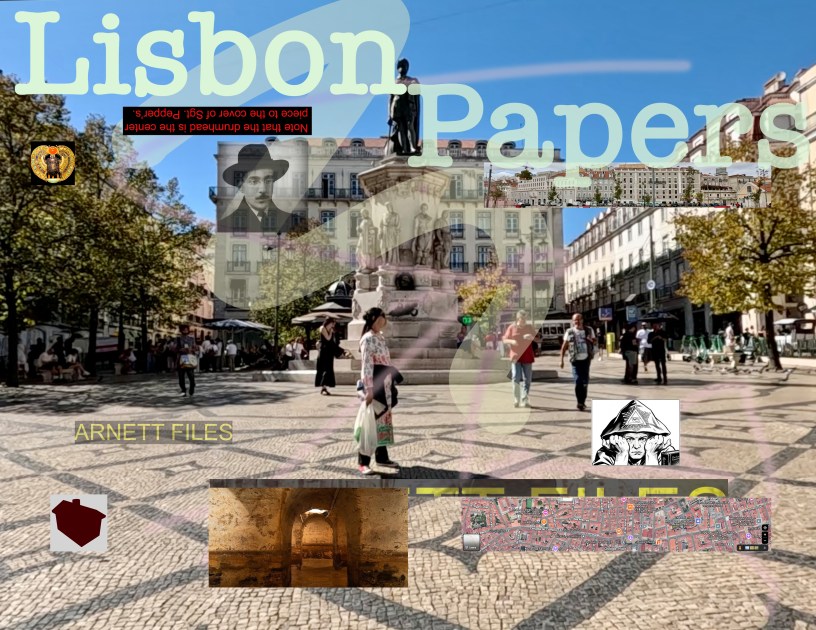
Lisbon, Portugal
I’m sitting in the Fabrica cafe sucking on a cortado like my life depended on it. I didn’t get to sleep until 6:30 a.m. and woke at 10:00 a.m. There were two things that kept me up last night. One was a severe case of jet lag, as I had arrived in Lisbon from New York City but a few days ago. The second was a mosquito that had penetrated into my room via an open window. This nasty bugger really sent me for a loop. And it seemed possessed of a preternatural intelligence. It was fast and evasive AF. No matter how many times I flung Pessoa’s Mensagem at it, the parasite continued to elude me. This close-quarters battle went well into the night. To keep my mind distracted, I read Billy’s Back, that feverish tumble down the ‘Paul is Dead’ rabbit hole. It seemed I was trapped in some nightmarish loop, with a blood-sucking vampire literally tapping my veins for the precious life fluid, and the ongoing rumination upon the topic of Aleister Crowley. There was a symmetry to the turmoils of body and mind that was not lost to me and by the time the sun began to rise, the matter began to abate somewhat.
I did not retrieve an actual body, but there was the possibility that after all my wild swings at the mosquito, this winged demon may have succumbed. Or, in all likelihood, it had had its fill of my blood and took lodging in some dark corner of the room only to reawaken the following evening for a fresh meal. We will find out. The objective now is to go back to the apartment, fetch my film camera then head up the R. Do Carmo and take a right on R. Garrett. There I will find the Livaria Bertrand-Chiado, the world’s oldest existing bookstore, certified by the Guinness Book of World’s Records. It was established sometime in the early 1700s. A block past that is located the Bairro Alto Hotel. This is an impressive 5-Star hotel which, under its former name, the Hotel Europa, was the location where Crowley stayed and met local writer Fernando Pessoa. It was from this meeting that Crowley, with the assistance of Pessoa, concocted Crowley’s infamous suicide hoax.
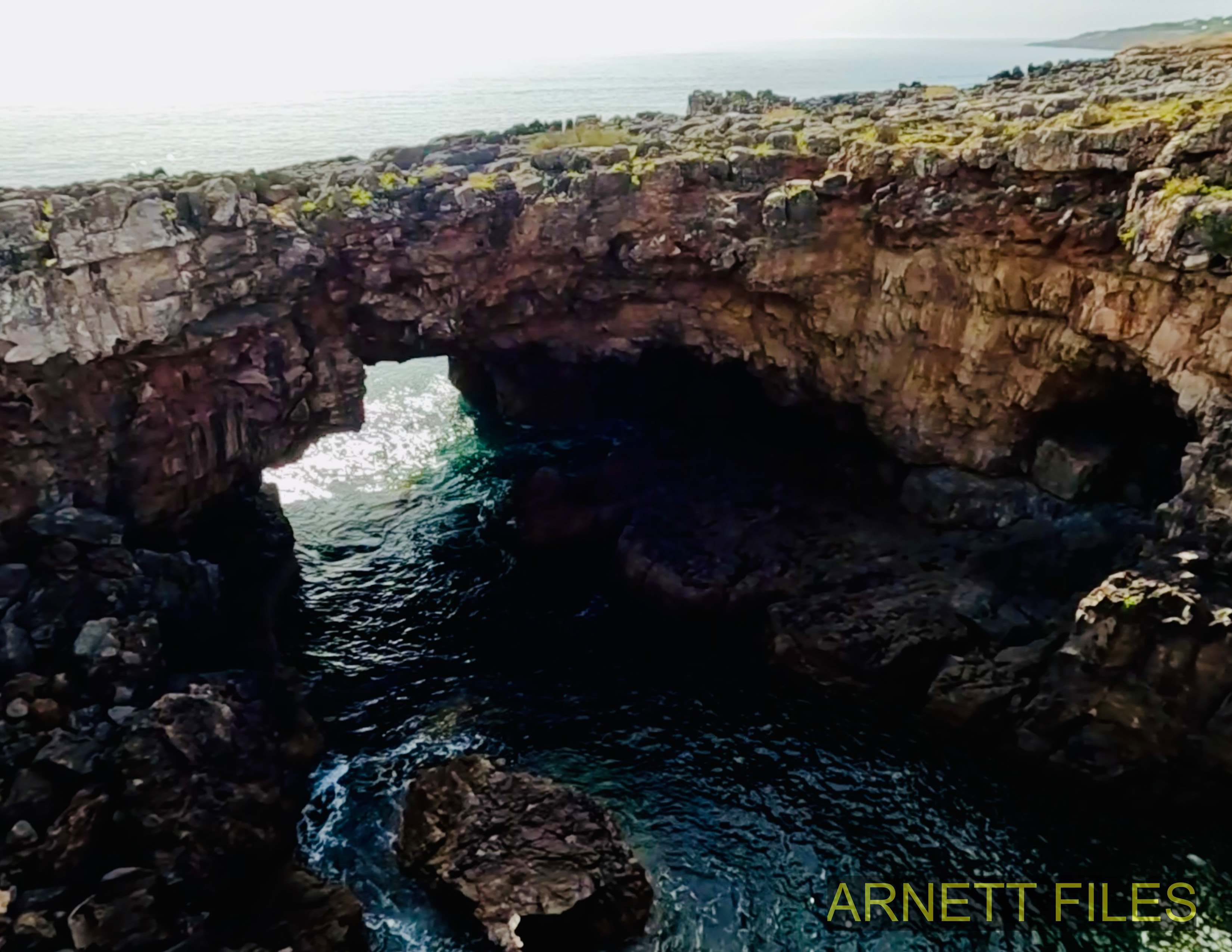
My interest here is to dig further into the mystery of Crowley’s ventures (and miss-adventures) in Portugal. There hasn’t been enough attention paid to this brief stint of the Beast in this seemingly innocuous corner of Europe and yet, as these things tend to go, it may very well prove pivotal. Crowley faked his suicide by the cliffs of the Boca do Inferno (Mouth of Hell) in September of 1930. The Mage pulled off this scheme with the aid of Portugal’s leading modernist poet, Fernando Pessoa. Some say Crowley’s elaborate PR stunt was to escape a soured romance, or evade tax collectors. Perhaps there were deeper occult motivations involved.
Regarding this business, I want to turn first and foremost to an article written by Fernando Pessoa, who was Crowley’s right hand man in the operation. Like the rest of it, there are some dubious aspects to even Pessoa’s account, as I would think there would be, it being a duplicitous matter from the start. In “The Mystery of the Mouth of Hell,” Pessoa gives his version of the event.
Pessoa begins by explaining the circumstances of how Crowley and he first met. In November (1929) he had received a mailer advertising the publication of Crowley’s Confessions which Pessoa found “extremely interesting.” He ordered the book and in December, Volume 1 of Confessions arrived into his possession. As Pessoa describes it, the book opened with Crowley’s horoscope and after an examination, Pessoa found an error in the reading. Pessoa himself was an avid astrologer. The Portuguese poet then penned a letter to the Great Beast, complementing the book as a whole, but duly noted that the horoscope was wrong. Crowley immediately responded with a letter, thanking Pessoa for his astrological correction, finding it “very acceptable.”
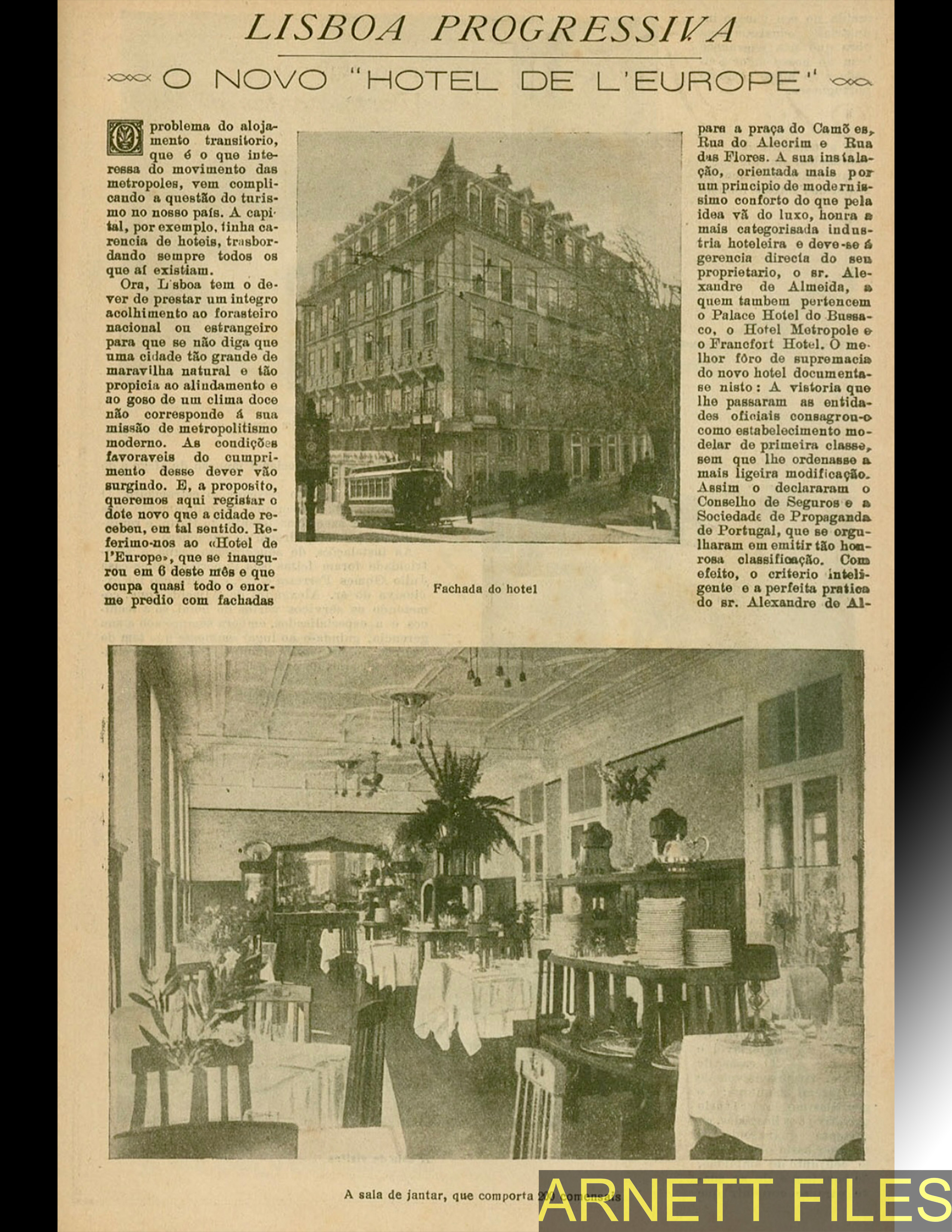
Shortly after, the second volume of Confessions arrived in the mail. Pessoa in turn sent Crowley three pamphlets of his own published verses. Crowley responded positively, saying he would like to meet the writer in person, and would avail himself of the first opportunity to visit Portugal. It was on August 29th of the following year that Pessoa received a telegram from Crowley announcing his imminent arrival and on September 2, 1930, the two men of letters met for the first time. Crowley was accompanied by a “very young” woman named Hanni Larissa Jaeger. Crowley and Jaeger stayed at the Hotel de L’Europe in Lisbon. Shortly after the 9th of September, Crowley and Jaeger departed for a visit to nearby Mount Estoril.
Crowley returned to Lisbon on the 18th, only this time he was alone. Jaeger had disappeared and Crowley feared she had succumbed to suicide, as was her “hereditary nature.” As well, according to Crowley, she was “being persecuted by a black magician named Yorke.” Crowley insisted on the urgency of the situation and Pessoa took the matter to the police. Pessoa was a personal friend of the Second Commander of the Security Police—Commander Major Joaquim Marques, who initiated a search for the missing woman.
Things get murkier still. According to Pessoa, “as far as I knew, they (the police) couldn’t find her.” He then noted a newspaper article reporting that the missing woman was discovered to have left the country on the 20th aboard a steamer. Crowley, on the other hand, stayed at the Hotel L’Europa from the 18th to 23rd. During this time, Pessoa and Crowley met several times. On the 23rd, “at half past 10,” Crowley said goodbye to Pessoa at the door of the Cafe Arcada, in Terreiro Paco. He never spoke to Crowley again. And yet, on the following day, the 24th of September, Pessoa notes “I saw Crowley, or his ghost turn the corner from Cafe La Gare onto Rue 1 de Dezembro.” Also on September 24, Pessoa saw the Great Beast or his “ghost,” a second time, walking with an English Tobacconist. On neither occasion did Pessoa speak to Crowley.
Supposedly, Crowley had departed for Berlin on September 23. Shortly after that, a suicide note was found on the edge of a cliff by the Boca do Inferno. It was weighted down by a cigarette case. Pessoa offers an interpretation of Crowley’s “suicide” note, which reads:
L.G.P.
Year 14, Sun in Libra
I can’t live without you. The other “Mouth of Hell” (sic) will get me—it won’t be as hot as yours.
Histos
Tu LiYu.
According to Pessoa, the “Year 14, Sun in Libra,” designates the current year, in the special chronology adopted by Crowley. The initials “L.G.P.” most likely pertain to Miss Jaeger’s “mystical name.” “Histos” may be a “magical word.” The signature, “Tu LiYu,” refers to a Chinese sage who lived some five thousand years ago and whom Crowley identified as a former incarnation of himself.
Pessoa was instrumental to pulling off the suicide stunt, leaking the story to newspapers and the police, with a strange overlap involving the apparent “suicide” of Crowley’s mistress Miss Jaeger. His sightings of Crowley’s “ghost” perambulating about town in the aftermath only adds to the theatrics. Pessoa had his own ambitions as well, working on an uncompleted manuscript for a detective novel titled O Mistério da Boca do Inferno.
Crowley himself popped up three weeks later in Berlin, fit as a fiddle and timed just right for the opening of his art gallery show. Pessoa and Crowley shared a mutual interest in affairs of the occult, and perhaps a darker motivation was involved. Recently, I received a comment by journalist Derek Flood on my X page alluding to such intentions. He notes, “The mouth of Hell was the perfect setting for Crowley to begin his journey from apparition in Lisbon to dead man walking in Weimar Berlin.”
Well damn, if that ain’t the definition of a magical operation I don’t know what is.
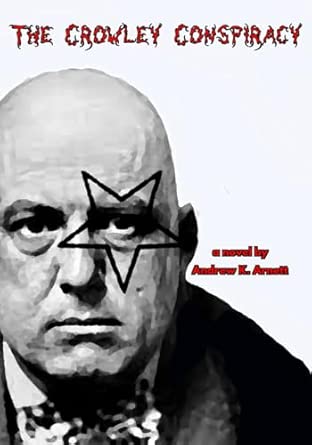
Andrew K. Arnett is a writer for New Dawn Magazine and author of the novel The Crowley Conspiracy published by Alien Buddha Press available at Amazon. In his spare time he hunts ghosts with the Brooklyn Paranormal Society.
Find Andrew Arnett on X @AndrewArnett