Written by Andrew K. Arnett
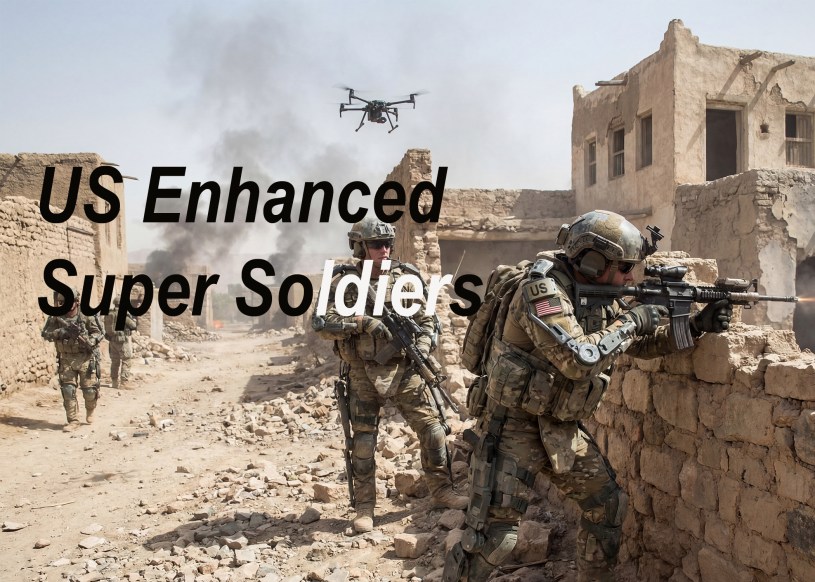
Reports by Venezuelan security guards of futuristic weapons and enhanced super soldiers used by the US in the capture of Maduro have been circulating in the media. They describe a scene where US forces wielding “unseen” weaponry so advanced and devastating it left the entire region in fear of US power. Some of these weapons may include seismic weapons, DEWs, HPMs, drones and more. The guard stated, “It was a massacre. We were hundreds, but we had no chance … I swear, I’ve never seen anything like it.”
The notion of a “super soldier” strains the credulity of the average man. Is it an urban myth, a cartoon character or is it a real a program the military is actively engaged in? The answer is, all the above. There has been rumors and stories circulating about scientifically enhanced killers for some time now. As well, the super solder is a staple of comic book content, arguably starting in the 1940s with Captain America given the “super-soldier” serum by the U.S. Army to fight the Nazis. But that is just a Marvel super hero story, right? Not so fast.
All modern armies are engaged in super soldier research and development. Since 2011, the average Pentagon annual budget for super soldier R & D is about $400 million per year. A similar push is taking place in other NATO countries including the UK and France. The U.S. National Security Commission on Emerging Biotechnology stated in 2025 that China is actively engaged in work on genetically engineered super solders. As for Russia, there is no doubt. In fact, they can take credit for being the first in the modern age to actively engage in the effort. In Soviet Union Russia during the 1920s, Joseph Stalin began a program to genetically-engineer a hard to kill human-ape hybrid resistant to pain.
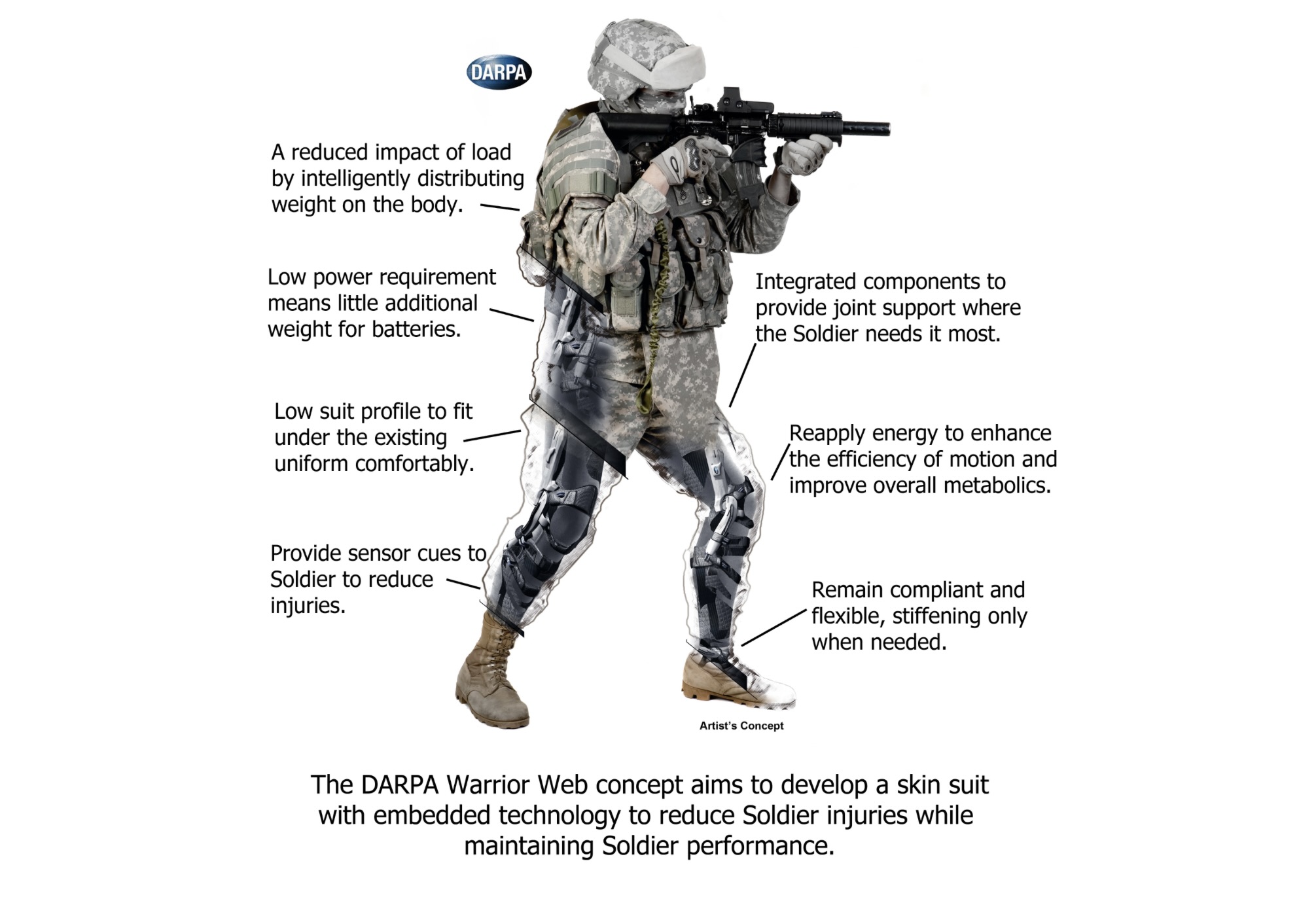
A report by the US Army Combat Capabilities Development Command Chemical Biological Center (DEVCOM CBC) released in 2019 published a report in 2019 entitled Cyborg Soldier 2050: Human/Machine Fusion and the Implications for the Future of the DOD. The paper identifies the four areas of interest for enhancement by the military: muscular, visual, auditory and neural. The “neural” aspect of this research in and of itself can have revolutionary impact on combat. This involves human communication with autonomous weapons systems (“read/write capability between humans and machines”), as well as telepathic communication between soldiers.
The matter of telepathy seems something straight out of science fiction and mysticism, as it very well is. With that being said, it is of very real interest by governments for military application. We know that the US government was engaged in such research with the 1995 declassification of the CIA-commissioned review of the Stargate Project.
The Stargate Project was a classified U.S. Army unit created by DIA and Stanford University at Forte Meade, Maryland in 1977. The purpose of this unit was to investigate psychic phenomena for potential military and espionage applications. Overseen by Lt. Frederick Holmes “Skip” Atwater and Maj. Gen. Albert Stubblebine, the work mostly focused on “remote viewing,” a term denoting the ability to psychically see things and events from a great distance. This effort would later by popularized in the film The Men Who Stare at Goats (2004).
Andrew K. Arnett is a writer for New Dawn Magazine and author of the book The Crowley Conspiracy available on Amazon.
 ARNETT FILES