This article by Andrew Arnett was first published at Substack on 24 January, 2022
Apocalyptic images spread like wild fire over the news channels. Indeed, they were of a wild fire, the Marshall Fire to be exact, which broke out in Boulder County on December 30, 2021. Certainly, it was a grisly way to usher in the New Year. Let’s face it, 2021 was not exactly a high point in American history. The fact that the final major news event of the year was a nightmarish blaze overtaking one of the most prosperous counties in the US seemed somehow appropriate. A vicious exclamation point to a hellish year. It set the mood dial firmly on somber, if not outright fear, and quashed any optimism moving into 2022. It did for me. But then again, I wouldn’t consider myself an optimist. Not in general terms. Not in this environment, at least.
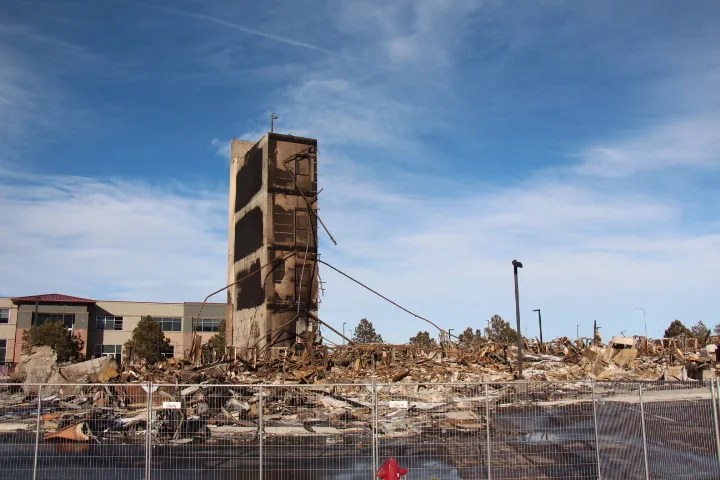
For two days, the Marshall Fire juggernaut ripped through Louisville, Superior and other parts of Boulder County north of Denver. Burning 1091 houses and damaging 179 more, the flames forced tens of thousands to flee their homes. Losses are estimated at $513 million and counting. Heavy snowfall on January 1st finally managed to snuff out the flames. When I arrived in Denver, three days after that, the ground was still smoldering.

Initial reports indicated no casualties, the press describing it as a “New Years Miracle.” Subsequently, six burn injuries have been confirmed and the partial remains of an adult were discovered on January 5. In addition, two adults, a man and a woman, are missing and presumed dead.
Experts have commented that climate change helped fuel the rare wildfire. The ground, usually moist from snow at this time of year, was dry and flammable, as a result of warm temperatures and a lack of precipitation in recent months. In addition, high winds coming down from the Rocky Mountains helped spread the flames.
On January 2, 2022, Boulder County Sheriff Joe Pelle reported that the fire began in a neighborhood by State Highway 93 and Marshall Road. The cause of the fire is still under investigation. A slew of spurious reports, innuendos and loose talk have hovered over how the fire began. Initial reports claimed that the fire started as a result of downed power lines. However, a survey conducted by Xcel Energy found no power lines down in the area where the fire started.

The Boulder County sheriff’s department is currently investigating wether the Marshall Fire might have started on property belonging to a religious group named The Twelve Tribes, located along Eldorado Springs Drive. The source of the claim comes from a video on Youtube that has since gone viral.
Local resident Mike Zoltowski was driving in the area when he shot the video of a shed burning on property belonging to the Twelve Tribes religious group on the morning of December 30, 2021. The police have subsequently secured a search warrant to search the premises.
A January 6 Denver Post article took a deeper dive into the the background of the group in question. According to the article, the Twelve Tribes was founded in 1972 by Eugene Spriggs in Chattanooga, Tennessee, blending Christianity, Judaism and Sprigg’s own personal beliefs. The article cited various controversies associated with the groups past, including overtones of misogyny, racism and mistreatment of children. Turns out Spriggs believed children should be disciplined with wooden rods and regular spanking.
One Twelve Tribe’s member, speaking anonymously to the Denver Post, stated:
“We’re just in the same boat as everyone else is in, we’re waiting on the authorities to conduct an investigation and we’re cooperating. We would like to find out where it started like everyone else. We’re obviously part of that community. Our hearts and prayers are with everyone.”
I come to the Denver area often, at least a couple of times a year and I wanted to take a closer look at the devastation myself. I wasn’t the only one, as President Joe Biden was flying into town that very day, January 7, to survey the damage in Boulder County.
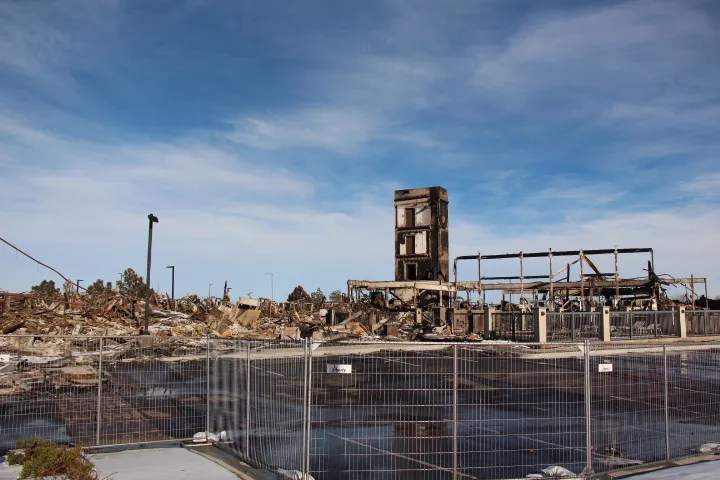
I drove into Boulder County by way of State Highway 93 and into Louisville. The devastation was appalling. Homes were burnt to the ground on both sides of the road in some neighborhoods. Even though a fresh blanket of snow had covered the ground, you could still smell the smoke and ruin. Armed solders and military vehicles blocked and guarded the entranceway to many of the neighborhood access roads. Down in Superior the destruction was even more dramatic. Large swaths of the shopping district looked like it had been hit by bombs. The area resembled a war zone.
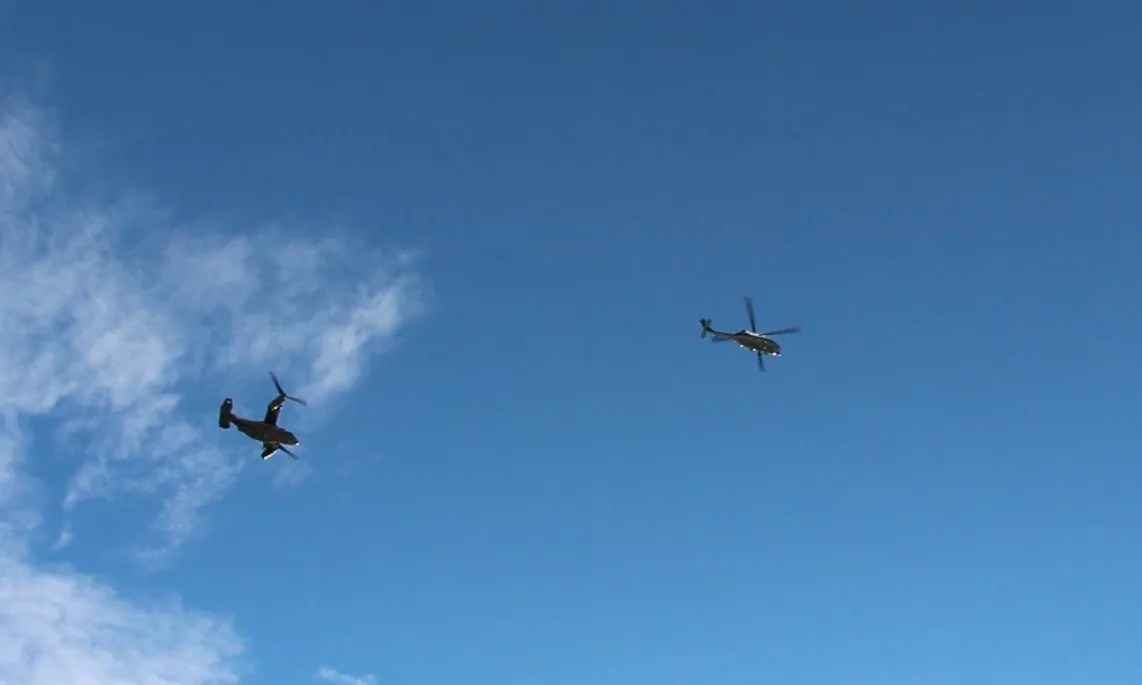
I drove up to a lookout point to get a better vantage of the wreckage. While there, the President’s helicopters came flying in low over head. Flying in from Denver International Airport to survey the scene, President Joe Biden, with his wife by his side, would later tour the area then give a press conference.
Speaking at the Louisville Recreation and Senior Center, Biden said:
“This situation is a blinking code red for our nation. The combination of extreme drought, the driest period from June to December ever recorded — ever recorded — unusually high winds, no snow on the ground to start created a tinderbox — a literal tinderbox. . . We can’t ignore the reality that these fires are being supercharged, they’re being supercharged by change in the weather.”
The First Lady, Jill Biden, also spoke, regarding untold number of pets lost in the fire, saying:
“I would like to say, on a personal note, the governor told me how many of you lost their family pet. And you know, they’re members of the family, too, so I want to just say how terribly sorry we are for the loss of your pets because we’re animal people. So, we know what a tough loss that is.”

Update: 2 March 2022
On Monday, February 7, 2022, the federal government granted Colorado about $10 million to combat abandoned coal mine fires. The move comes on the heels of a decision by authorities to investigate abandoned coal mines in the area, which are suspected of causing the devastating Marshall Fire which leveled more than 1,100 houses and businesses in Boulder County.
Abandoned coal mines may keep burning for years after they are closed and according to the Colorado Underground Coal Mine Fires 2018 Inventory Report, there are approximately 1,736 known abandoned coal mines in the state of Colorado. Two of these are known to exist in Boulder County. One is the Marshall Mine located at the southwest corner of the intersection at Marshall Road and Highway 93. The other is the Lewis Mine found at the northeast corner of the intersection of Cherryvale Road and Marshall Road. In addition to these, authorities are still investigating other possible causes for the fire including power lines, human activity, etc.
References
Huspeni, Dennis; Jent, Breeanna (December 31, 2021). “New Year’s miracle’: No casualties reported in Marshall fire burning in Boulder County.” The Gazette. Retrieved January 6, 2022.
Daley, Haven (January 6, 2022). “Officials: Colorado wildfire caused $513 million in damage.” ABC News. Retrieved January 8, 2022.
Bradbury, Shelly (January 6, 2022). “Marshall fire investigation spotlights Twelve Tribes religious sect.” The Denver Post. Retrieved January 8, 2022.
Luning, Ernest (January 7, 2022). “We’re here with you’: President Biden, first lady tour areas ravaged by Marshall fire.” Colorado Politics. Retrieved January 8, 2022.
Flynn, Coleen (February 9, 2022). “Colorado to get nearly $10 million to fight coal mine fires after Marshall Fire destruction.” Fox31. Retrieved 2 March 2022.
 ARNETT FILES